Balers
Balers are machines designed to compress and bind a wide range of materials into dense, secure bales, typically using baling wire, strap, netting, or twine. In industrial recycling, manufacturing, agriculture, warehousing, and retail operations, balers help turn loose scrap and bulky waste into uniform loads that are easier to store, stack, ship, and sell into downstream recycling streams.
While balers and compactors are often grouped together by equipment manufacturers and buyers researching waste handling systems, there are meaningful differences in how each machine supports industrial manufacturing, distribution, recycling, and commercial operations. Understanding those differences can help companies choose the right equipment for waste reduction, recyclable material recovery, and long-term operating efficiency.
Balers are primarily used in industrial manufacturing and recycling environments to compress and bind recyclable materials into manageable, transportable bales. Cardboard, OCC, paperboard, plastic film, PET bottles, aluminum cans, textiles, scrap metal, and secondary fibers are all common baled materials. This makes balers highly valuable in recycling processes, where materials need to be neatly packaged for handling, shipping, commodity resale, and reprocessing. Compactors, by contrast, also compress material but are generally used to reduce the volume of mixed waste rather than prepare recyclables for transport or market.
Although their functions overlap, especially when compactors are occasionally used for recyclable materials, the main difference lies in the end goal: balers create dense, tied bales with resale and transport value, while compactors are usually geared toward reducing disposal volume. That distinction matters for buyers comparing waste equipment, recycling machinery, and material handling systems. Even so, it remains common to hear the terms “baler” and “compactor” used interchangeably in everyday conversation, online searches, and equipment listings.
- Balers compress recyclable materials into uniform, bound bales.
- Compactors reduce waste volume for collection and disposal.
- Balers are often selected when facilities want cleaner recycling streams, lower hauling costs, and better storage efficiency.
Balers FAQ
What is the primary function of a baler?
A baler compresses and binds recyclable or waste materials into tightly packed bales for easier storage, transport, and recycling. It’s widely used in industrial, commercial, agricultural, and recycling applications where managing bulk materials efficiently helps improve housekeeping, logistics, and material recovery.
How do balers differ from compactors?
While both machines compress materials, balers create bound bales for transport and recycling, whereas compactors reduce overall waste volume for disposal. Balers are typically chosen for cardboard, paper, plastics, textiles, and metals that can be recycled, while compactors are commonly used for mixed waste streams.
What industries commonly use balers?
Balers are widely used in manufacturing, agriculture, distribution, warehousing, retail, food processing, waste management, and recycling industries. They help facilities compact cardboard, plastic, metals, paper, and textiles to improve waste handling, shipping efficiency, and sustainability performance.
What are the main types of balers used in industry?
The two main baler types are vertical and horizontal. Vertical balers are compact and work well for smaller facilities handling lighter materials and lower daily volumes. Horizontal balers handle larger loads, support continuous operation, and are often used in high-volume industrial recycling and packaging environments.
How do balers contribute to sustainability?
Balers reduce landfill waste by compacting recyclable materials for reuse and transport. They support more sustainable operations by lowering hauling frequency, improving material separation, promoting recycling, and enabling materials like cardboard, paper, plastic, and metal to be repurposed into new products.
What maintenance is required to keep a baler running efficiently?
Regular maintenance includes cleaning dust and debris buildup, checking hydraulic systems, monitoring motor temperatures, and inspecting hoses, cylinders, filters, conveyors, safety switches, and electrical components. Routine service helps prevent overheating, jams, and mechanical wear while extending equipment life.
What factors should be considered when purchasing a baler?
Key factors include the type of material being processed, expected throughput, bale size requirements, available floor space, loading method, labor needs, and budget. Buyers should also review safety features, OSHA and ISO considerations, service support, and whether a refurbished baler offers the right value for the application.
What accessories can improve baler performance?
Accessories like conveyors, strapping tools, baling wire, PET strap, shredders, grinders, floor scales, and storage racks can improve productivity and workflow. These additions streamline material handling, reduce manual labor, and help facilities produce uniform, securely bound bales for transport or recycling.
The History of Balers
Modern balers trace their lineage to hay presses first developed in the mid-nineteenth century to simplify the demanding process of gathering, compressing, and stacking hay. Early hay presses were large stationary machines installed in barns and haylofts, often spanning multiple stories. Many were powered by horses that lifted a heavy press weight and released it to compress the hay. Other systems used horse- or mule-driven sweeps connected to gears or jackscrews. Before these machines became available, farmers relied on manual labor, hand tools, and time-intensive handling methods. The introduction of stationary hay presses laid the foundation for portable baling systems and, eventually, the industrial balers used today in recycling and waste management.
The 1860s brought the first mobile, man-powered hay balers, although those early models often required several workers to operate. Over the following decades, inventors introduced one-person machines, plunger mechanisms, and more reliable binding systems. As demand grew in agriculture and material handling, baler designs gradually became more practical and standardized. This evolution reflected a larger industrial trend: businesses and farms alike wanted faster throughput, reduced labor demands, and more uniform loads for transportation and storage.
In the 1900s, mechanical balers marked another major step forward in agricultural productivity. A key milestone came in 1936 when Innes introduced the first automatic round baler, incorporating a self-tie system that used Appleby-type knotters adapted from grain binder technology. In 1939, Ed Nolt improved the design and patented a more dependable version that influenced the industry for decades. From there, balers expanded far beyond hay handling and became widely used for cardboard recycling, paper recovery, plastics processing, textile handling, and scrap metal compaction.
From the hay baler evolved the industrial baler, a machine built to compress and bind a broad mix of waste and recyclable materials, including foil, cans, plastic containers, paper products, paperboard, office paper, corrugated cardboard, and newspaper. As recycling becomes more integrated into manufacturing and distribution operations, baling and compacting equipment continues to support cleaner facilities, lower waste hauling costs, and reduced environmental impact. Many businesses now build full turn-key recycling or composting systems around a baler to improve material recovery and create a more efficient waste stream.
How Balers Work
Balers operate by manually or automatically feeding materials into the loading or input area. Because they often process bulky corrugated boxes, plastic film, paper scrap, textiles, or other high-volume recyclable materials, the feed opening and hopper are usually sized to support efficient throughput. From there, the material enters the compression chamber, sometimes called the main cylinder or bale chamber, where a ram or platen applies force to squeeze it into a dense shape. Once the target density is reached, the compacted material is tied or strapped so it retains its form during storage, stacking, transport, and shipment to a recycling facility or end user.
Most industrial balers are electrically powered and use hydraulic systems to generate high compaction force with dependable control. Hydraulics allow the machine to move material efficiently while limiting unnecessary energy loss and heat buildup. Depending on the machine design, binding may be performed with baling wire, plastic strap, or twine, and some systems use auto-tie technology to increase output and reduce operator labor. Buyers often ask: how much material can a baler process per hour, and what bale size is best for shipping? The answer depends on the material type, chamber dimensions, feed method, and the density required for transport or resale.
Balers stand apart from many other waste handling machines because they do more than reduce volume. They create repeatable, stackable bundles that make inventory control, warehouse housekeeping, trailer loading, and recyclable commodity handling far more efficient. For facilities evaluating waste reduction equipment, that bundled output is often the deciding factor.
Baler Uses
Balers improve the handling, transportation, storage, and recycling of many different materials. By reducing the bulk of waste and recyclable scrap, they lower the effort, labor time, and hauling expense associated with disposal and material recovery. They also support cleaner loading docks, more organized back rooms, and better use of warehouse floor space. These advantages make balers a practical choice across industrial manufacturing, retail, consumer goods, warehousing, logistics, waste management, recycling, and agriculture.
In industrial, retail, and consumer sectors, including automotive manufacturing, plastics manufacturing, and food service, balers help compress waste, packaging scrap, and production byproducts. In farming and agricultural operations, they compact harvested crops for easier movement, stacking, storage, or feeding. Depending on the application, balers can process cardboard, paper, plastic film, textiles, aluminum cans, scrap cloth, metal offcuts, and many other materials. This flexibility is one reason buyers searching for a baler for cardboard, plastic, metal, or warehouse waste often find baling systems useful in more than one department.
Benefits of Balers
Balers are widely used across industrial facilities because they improve waste handling, reduce disposal costs, and simplify recycling programs. For organizations focused on housekeeping, sustainability, and operating efficiency, a baler often becomes a high-value part of the material handling workflow.
Baler Efficiency
One of the biggest advantages of balers is efficiency. On average, balers and compactors can compress roughly 10 cubic yards of trash or cardboard into about 1 cubic yard. That kind of volume reduction allows dumpsters, gaylords, trailers, or storage areas to hold far more material than they could without a baling system. Fewer trash pulls, fewer forklift trips, and fewer outbound hauls often translate into measurable savings. For many businesses, this is where baler ROI becomes easy to see.
Improved Workplace Environment
Balers contribute to a cleaner, more organized work area, which can improve morale, workflow, and overall productivity. Loose cardboard, plastic wrap, or textile scrap can quickly crowd aisles and staging zones. Converting that material into compact bales reduces clutter and helps create a safer, more professional facility appearance for employees, customers, and auditors.
Baler ROI
Businesses often see a fast return on investment when they install a baler or related compaction system. Lower hauling bills, better labor efficiency, improved recycling rebates, and reduced floor-space waste can offset the purchase price sooner than many buyers expect. When evaluating equipment, it is helpful to compare material volume, labor needs, bale weight, and pickup frequency before and after installation.
Sustainability of Balers
Balers help businesses manage waste in a more sustainable way by making recyclable materials easier to separate, store, and move through recovery channels. Complete turn-key recycling and composting systems can be built around a baler, creating a more consistent process for handling paper, cardboard, plastic, and metals. Baled materials can then be transported efficiently and repurposed into new products. Scrap metal may be recycled into new sheet stock, while paper fibers may be reprocessed for use in packaging or other manufactured goods. For companies working to reduce landfill use and support circular material flows, balers are a strong fit.
Maintaining your baler in top operating condition starts with cleanliness. Dust buildup can act as insulation and raise system temperatures, so regular cleaning is good practice. Operators should also monitor motors, hydraulic fluid, filters, hoses, cylinders, and conveyor systems for wear or overheating. A consistent preventive maintenance schedule based on supplier recommendations helps reduce downtime and keeps bale quality more consistent.
To maximize efficiency, keep the motor’s kilowatt (kW) speed steady and avoid overdriving the machine. Running a baler too hard can increase the chance of jams, clogging, or component wear. Many facilities also keep spare parts on hand so they can quickly replace worn items and minimize interruptions to production, shipping, or recycling operations.
Design of Balers
Balers are typically composed of components such as hydraulic cylinders, wheels, arms, frames, platens, feed openings, and tie mechanisms. The manufacturing process for a baling machine begins with cutting sheet metal to the correct size. Manufacturers may use punching, blanking, laser cutting, and shearing. Structural elements such as frames, shafts, and arms are cut from bar stock, and holes or slots are added through drilling, punching, or milling.
The next stage involves welding the various components together, often with robotic welding for repeatability and precision. After welding, parts are cleaned, painted, and assembled, and then lubricants, tires, bearings, hydraulic oil, and warning labels are added as required. Before a baler is released for service, it is inspected and adjusted so it meets performance, safety, and operating expectations. Buyers comparing machines often look at chamber strength, platen force, tie options, feed opening size, and ease of maintenance when reviewing design quality.
Balers are primarily constructed from structural steel and sheet steel sourced from bar stock, sheets, or rolls. Belts and other flexible components are commonly made from durable materials such as nylon and polyester to withstand repeated loading cycles.
Balers are available in a variety of forms and can produce bales in different sizes and shapes, including rectangular and cylindrical packages secured by twine, strapping, netting, or wire. Some machines are stationary, while others are mobile and towable. The exact baler design depends heavily on the application. Hay balers, for example, use pickup tines and field-ready mechanisms, while industrial balers focus on dense, repeatable packaging for recyclable commodities and waste streams.
Balers used in agriculture may include chopping features, with chopping lengths measured in millimeters and selected based on the crop or feeding requirement. Industrial buyers, on the other hand, often focus on bale size, chamber dimensions, density, and loading method. Smaller bales can be easier to move by hand or pallet jack, while larger bales may be preferred for trailer efficiency and commodity handling. That is why customized balers are often a smart long-term option when a facility has specific storage, forklift, dock, or transportation requirements.
Industries such as restaurants, retail facilities, fulfillment centers, and warehouses often benefit from balers configured for their material mix. Tailored units can compact boxes, packaging film, food-service containers, and other recurring waste streams more effectively, helping the operation improve labor flow and reclaim usable floor space.
Balers Images, Diagrams and Visual Concepts
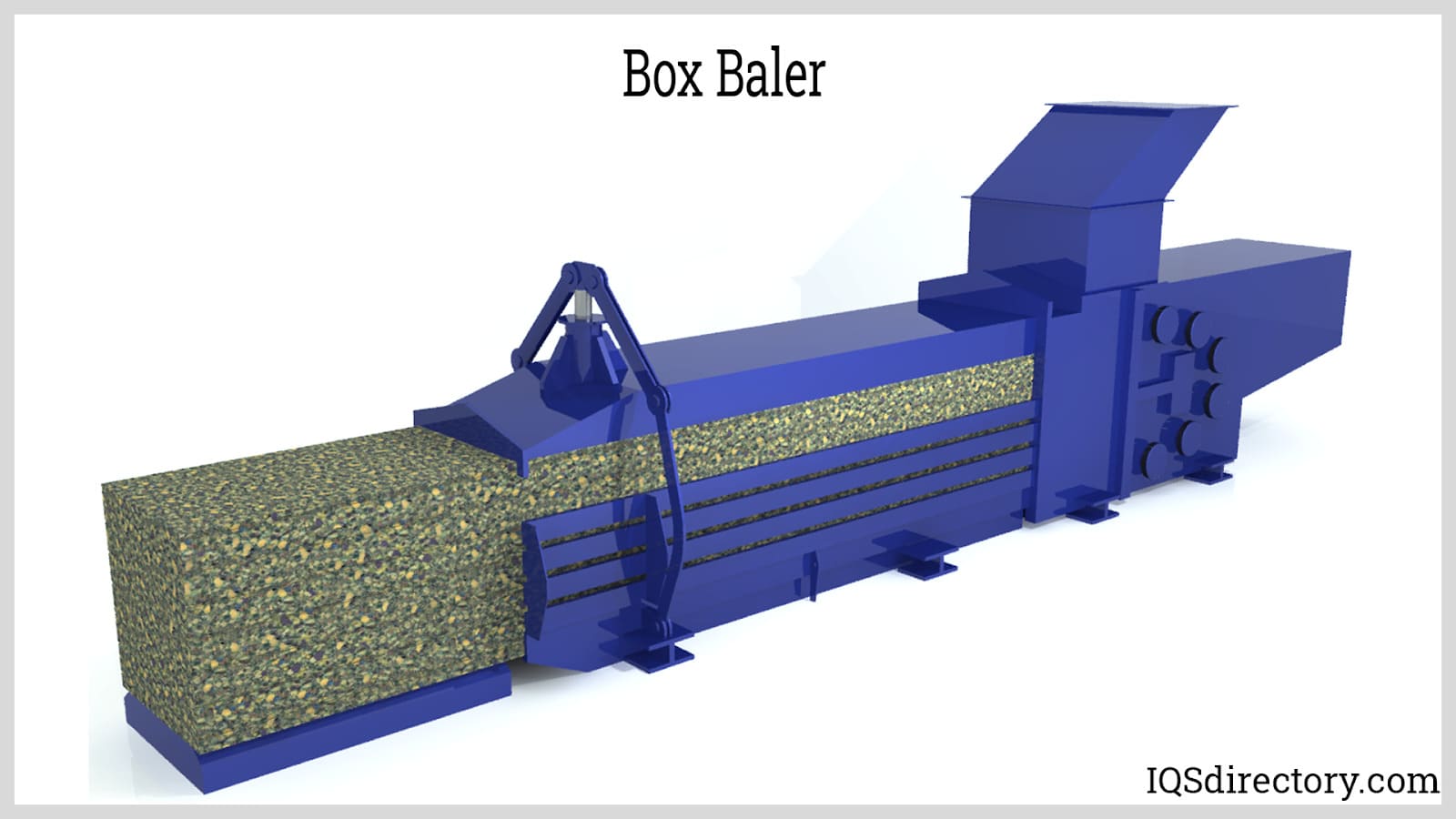
A compacting device which converts materials into rectangular bales.
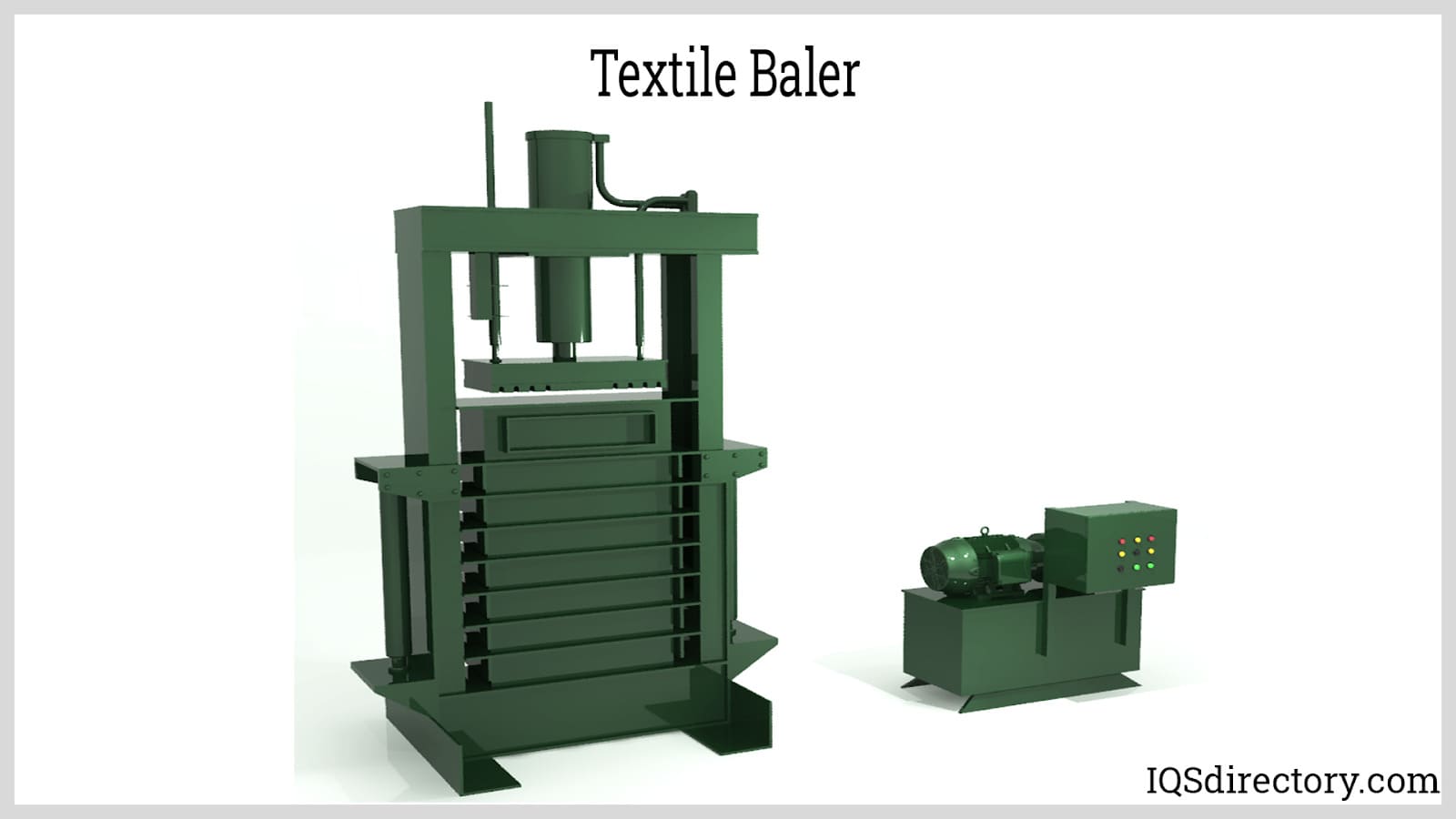
Converts textile material into bales for hauling and transportation efficiency.
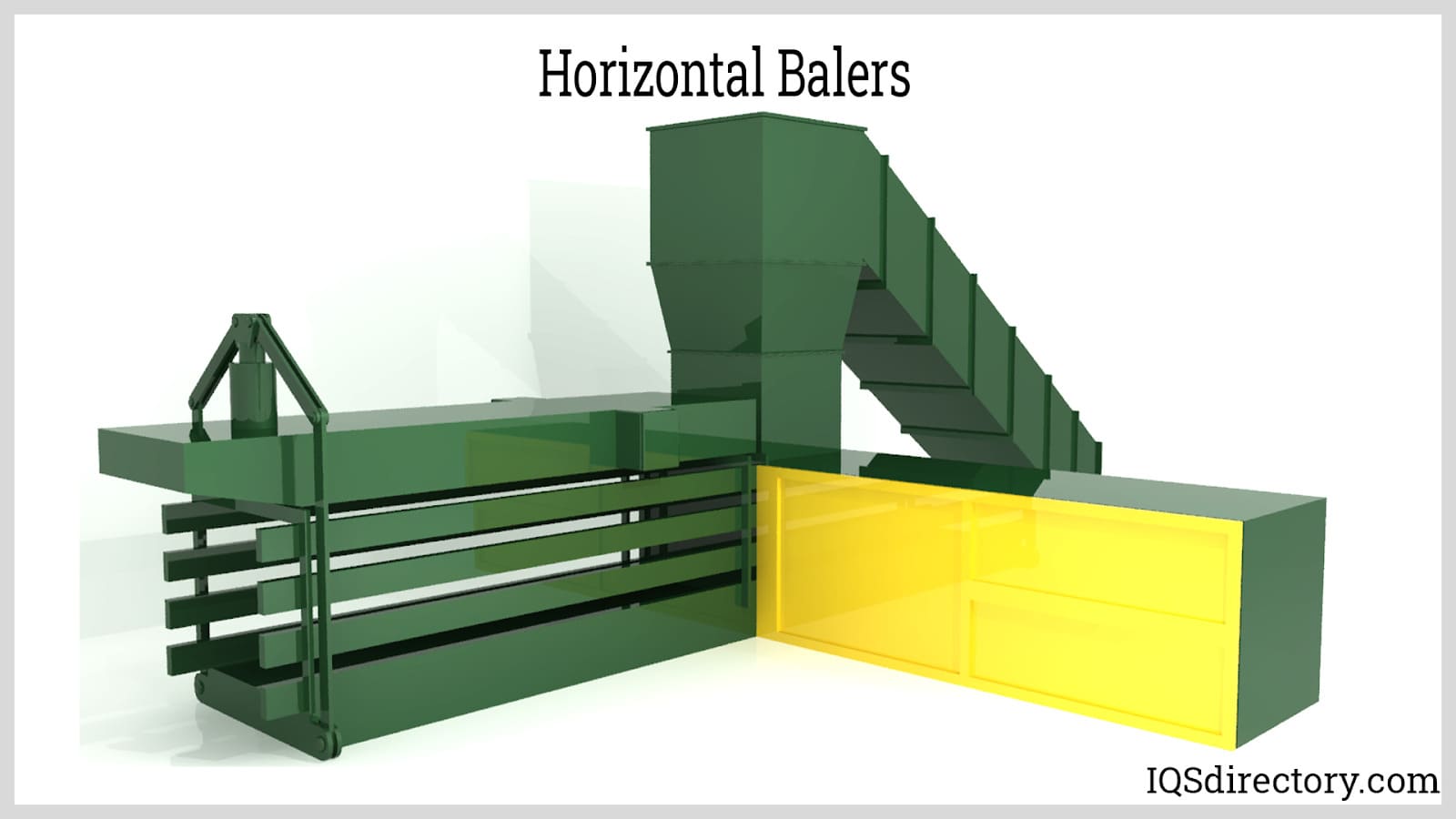
A baler that uses horizontal force to compress the materials.
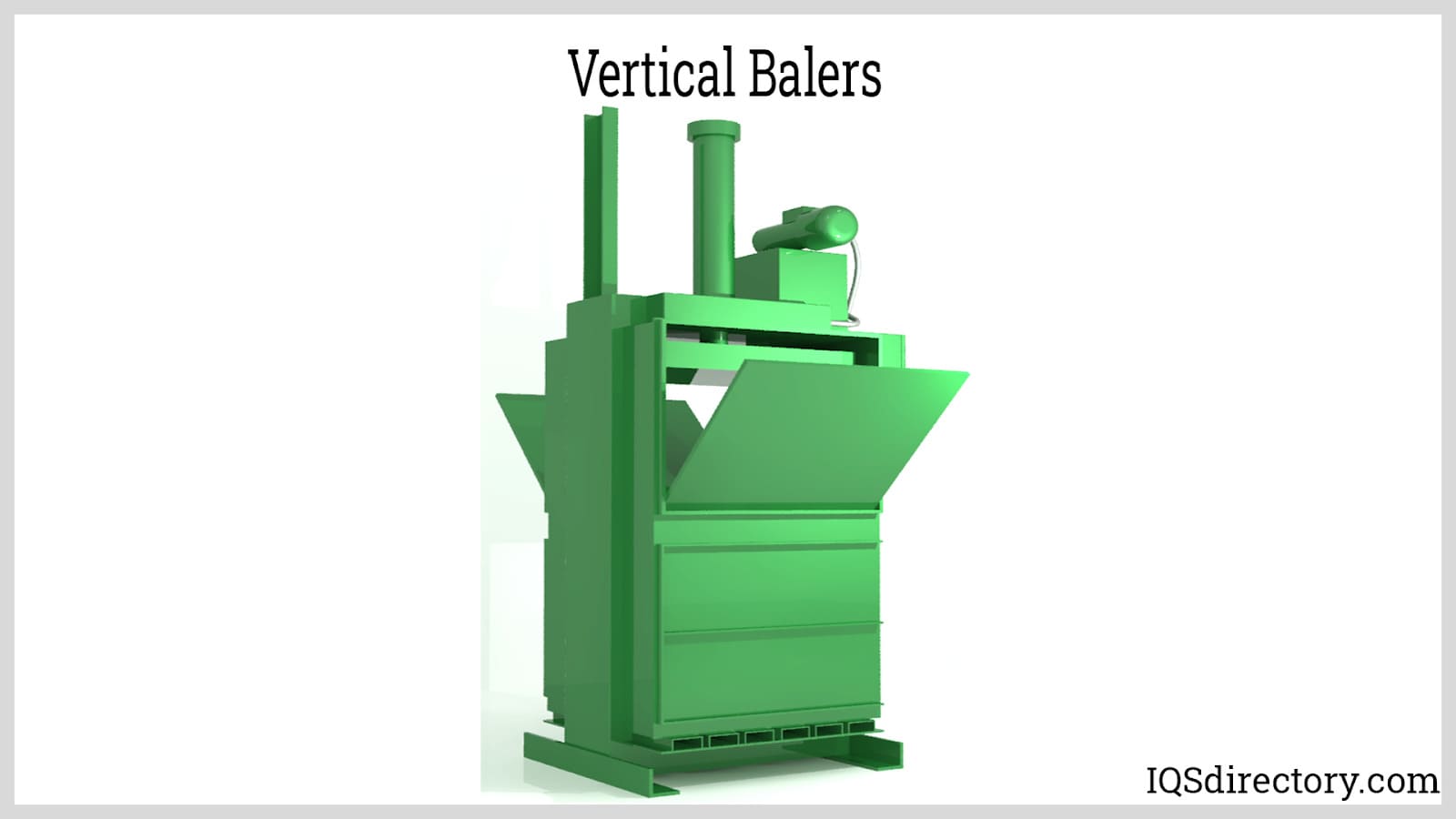
A baler that compresses materials by using vertical downward force.
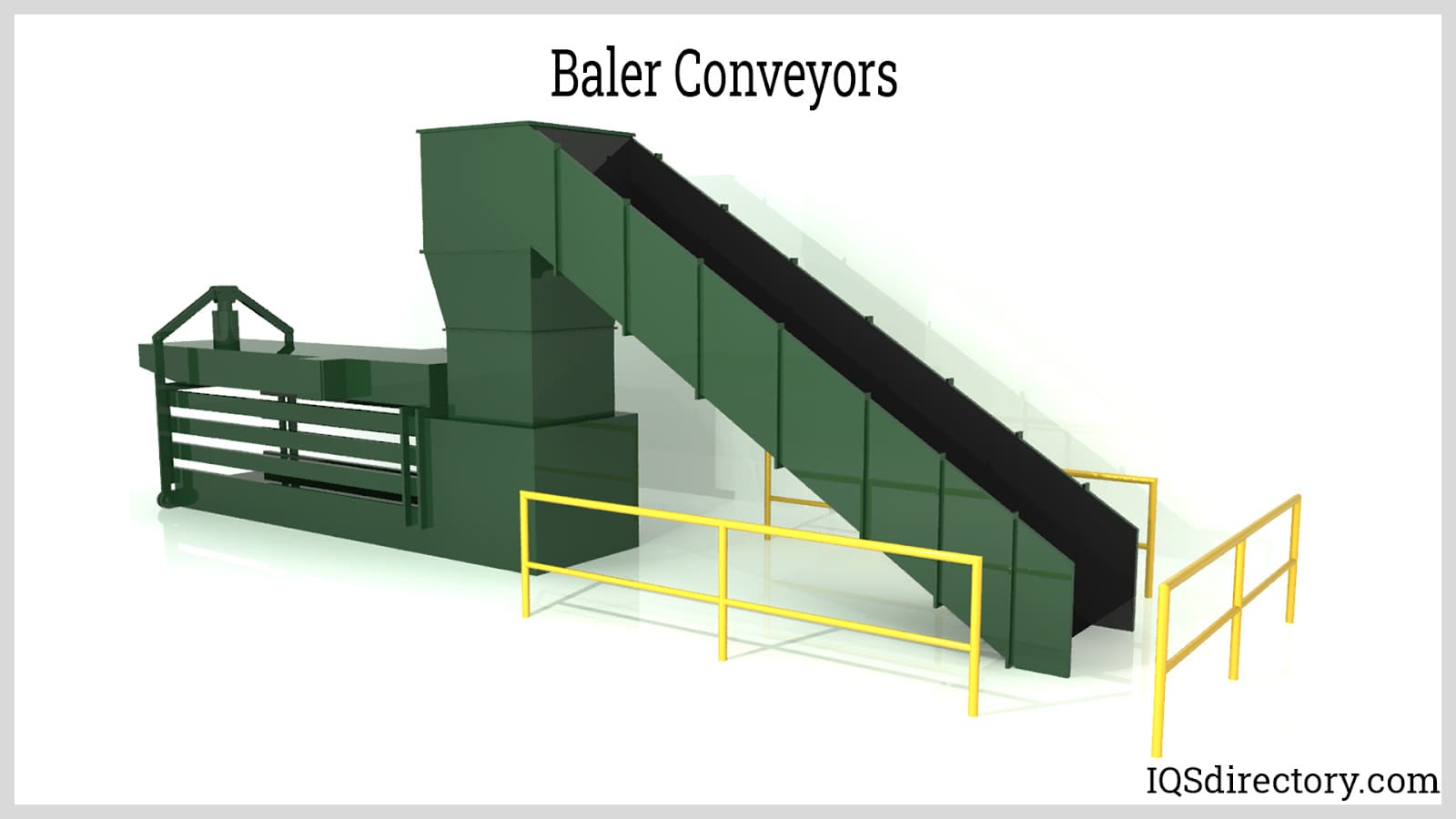
Baler conveyors are used for material feeding at a lower elevation.
Types of Balers
Vertical Balers and Horizontal Balers
Balers are categorized into two primary structural types based on their intended applications: vertical (downstroke) and horizontal. Vertical balers are loaded from the top and compact materials in a downward direction. They are commonly used for cardboard, paper, and lighter plastics, making them a strong fit for stores, smaller warehouses, print shops, and facilities with limited floor space or lower scrap volumes. Vertical balers are usually single-load systems that require manual unloading after compaction.
Horizontal balers, by comparison, are designed for continuous use and can offer hand-feeding, conveyor-feeding, or fully automated feed options. Although they require more floor space, horizontal balers can handle larger loads and a broader variety of materials, including cans, plastic containers, paper, and secondary fibers. Many horizontal systems can process materials ranging from food-service packaging to vehicle tires with less manual preparation, which is why high-volume packaging, distribution, recycling, and automotive facilities often rely on them.
Heavy Duty Balers
Heavy-duty balers, sometimes referred to as baling presses, are built for materials that require significant pressure to compress. These machines may include collection bins, reinforced frames, and heavy platens that eject dense finished bales. For applications involving drums or dense metal scrap, a heavy-duty baler may also function in a crushing role.
Round Balers
Primarily used in agriculture, round balers create cylindrical bales of hay and similar materials. Their design makes field handling and transport easier, which is why they remain a common choice in farming and forage operations.
Specialty Balers
Specialty balers are tailored for specific materials or process requirements. Some incorporate moisture extraction, liquid management, or application-specific chamber designs for handling scrap with oils, liquids, or unusual densities. These machines expand the flexibility of baling systems in specialized industries.
Cardboard Balers
Cardboard balers are designed specifically for corrugated material and box waste, making them a popular solution for retailers, warehouses, fulfillment centers, and recycling facilities that generate large volumes of OCC and packaging scrap.
Metal Balers
Metal balers are engineered to compress ferrous and non-ferrous metals for the recycling, waste management, and scrap industries. They improve handling, storage density, and transport efficiency for metal scrap streams.
Waste Compactors
Also called industrial trash compactors, waste compactors are designed for mixed waste materials and are available in vertical, horizontal, portable, stationary, and self-contained styles. Some include auto-tie or automated handling features, but their main job is still volume reduction rather than bale production.
Industrial Compactors
Industrial compactors reduce material size for more efficient hauling and may be stationary or self-contained. Stationary compactors remain in place during use but can be detached for emptying, while self-contained models are sealed systems that help prevent leaks during compaction and transport.
Plastic Balers
Plastic balers compact and bale a wide range of plastic materials, including film, containers, and packaging scrap, helping simplify recycling, reduce handling costs, and improve storage density.
Scrap Balers
Scrap balers handle different types of scrap metal by crushing, cutting, and compressing them into recyclable units. They are widely used where dense, secure loads are needed for efficient metal recovery and shipping.
Waste Balers
Waste balers compress waste into secure, transportable bundles, making them useful for facilities that want more efficient handling before disposal, recycling, or repurposing. They support cleaner operations and more structured waste management programs.
Baler Standards and Specifications
Balers must be properly built, operated, and maintained to support operator safety and dependable performance. It is important to confirm that your baler aligns with Occupational Safety and Health Administration (OSHA) requirements and any applicable ISO standards related to machinery, guarding, controls, and the intended industry application. Standards can vary by use case, location, and machine type, so buyers should review safety documentation, controls, lockout procedures, and service support with their supplier before purchase.
Things to Consider When Purchasing a Baler
Balers are known for durability and long service life, which makes refurbished units an attractive option for businesses looking to manage costs. A properly rebuilt used baler can provide years of reliable performance at a lower purchase price, especially when paired with solid maintenance records and available replacement parts.
With many baler manufacturers and suppliers in the market, selecting the right partner starts with understanding your material stream and operating goals. Buyers should compare machine type, throughput, bale dimensions, floor space requirements, feed style, tie method, power needs, and service support. Common buying questions include: What size baler do I need for cardboard? Is a vertical or horizontal baler better for my facility? Should I buy new or refurbished equipment? A careful comparison can make the decision much easier.
Pay close attention to supplier responsiveness and product knowledge. The best partner is one that takes the time to understand your timeline, budget, available space, material type, and long-term needs. Once you identify a supplier that matches your goals, you can begin building a relationship that supports installation, training, service, and future upgrades.
Baler Accessories
A range of accessories is available to improve baler performance and support smoother operation. Depending on the machine and application, bundling materials such as galvanized steel baling wire, PET strap, twine, or netting may be needed to produce secure, durable bales that hold their shape during storage and shipment.
Beyond bundling supplies, other accessories can improve throughput and reduce manual handling. Strapping tools and dispensers help manage tying materials, pallet racks support organized bale storage, and conveyors automate feed operations for higher-volume workflows. These additions can be especially useful in distribution centers, recycling facilities, and packaging plants where material arrives continuously.
Additional equipment can include aluminum can grinders, industrial shredders, and corrugated cardboard shredders for preparing material before baling. Floor scales help verify bale weights for transport, recycling, or commodity sales. Dollies, hoppers, and recyclable bags can also improve movement and staging, depending on the application.
Each accessory should be selected around your workflow, material stream, and labor goals. A supplier can help match accessories to the baler so the full system supports faster, cleaner, and more productive material handling.
Baler Terms
Auto-Tie
A mechanism designed to automatically bind bales using wire or other tie materials, helping streamline the baling cycle.
Banana Effect
A condition where a bale develops a curve because density is not uniform throughout the bundle, placing added stress on the banding material.
Baler
A machine used to compress and bind secondary materials into compact units for easier storage, recycling, or shipment.
Bales
Tightly compressed bundles of material, usually bound with wire, strap, or twine for stability and transport.
Banding
The securing material, often wire, strap, or nylon, wrapped around bales to keep them tightly bound.
Compaction
The process of increasing the density of a material by applying pressure.
Density
A measure of how tightly material is packed within a given space.
Feed Width
The width of the opening where material is introduced into a shredder or baler for processing.
Ferrous
Metals composed mainly of iron, such as steel, that typically have magnetic properties.
Hammermills
Powerful reduction machines equipped with high-speed rotors and hammers that break materials into smaller pieces before further processing.
Hydraulic Press
A press that uses liquid-driven piston force to apply high pressure for compression or shaping.
Impact Crusher
A machine with large rotors and hardened bars that pounds material into smaller fragments by impact.
Incline Conveyor
A conveyor system that moves material upward at an angle to reach an elevated feed point.
Industrial Shredders
Machines used to process and reduce solid materials into smaller pieces before disposal, recycling, or baling.
Landfill
A designated waste disposal area where waste is covered with earth and managed to reduce contamination risks.
Pneumatic Press
A press powered by gas or air pressure acting through a piston.
Recycling
A resource recovery process in which scrap materials are collected, separated, processed, and reused as feedstock for new goods.
Scrim
A loosely woven fabric or netting material used for support or backing in various applications.
Secondary Materials
Materials recovered during the recycling process that can be reused as manufacturing inputs.
Throughput
The amount of material processed or conveyed within a set period of time.
Waste Exchange
A network that connects companies generating waste materials with organizations able to reuse those materials as raw inputs.
More Baler Information